

Breaking Down Barriers
Creating Spaces of Support
As we center everything we do around belonging, and extend an invitation to belong to those around us, a critical question arises:
Who might feel like they do not belong?
Take a moment to think about your local community. What are the demographics? Then look at your Corps and your Ministry to Women group(s).
Is anyone missing in the picture?

Seen & Unseen
Not every barrier is visible.
Some people navigate the world with challenges we can immediately recognize. Others carry disabilities, diagnoses, mental health struggles, sensory sensitivities, chronic illnesses, learning differences, trauma, or neurodivergent experiences that remain unseen by those around them.
Yet every person carries the same longing: to be known, valued, and welcomed.
Love On Display
Sometimes love looks like building a ramp. Sometimes it looks like providing sensory accommodations. Sometimes it looks like adjusting communication styles, offering flexibility, extending patience, or creating room for someone to participate in a way that honors their dignity.
In John 9:1-3, Jesus’s disciples inquired on whether the man born blind had sinned or if his condition was due to his parent’s sins. The disciples assumed that the man’s disability was a consequence of wrong doing. But in verse 3, Jesus’ response provided a beautiful and different perspective:
“Neither this man nor his parents sinned,” said Jesus, “but this happened so that the works of God might be displayed in him.”(John 9:3)
Seeing with Intentionality
Throughout His ministry, Jesus consistently and intentionally saw what others overlooked. He noticed those on the margins. He responded with compassion, dignity, and care. He looked beyond limitations and saw the image of the Father in every person. Throughout scripture, we have many imperfect examples of how believers in God exampled the perfection that was to come through the person of Jesus. And it was often through sacrifice and pursuing justice.
Belonging Begins with Seeing
When we cultivate environments where people can fully engage, contribute, worship, lead, and flourish, we reflect God’s heart to a broken world; a world in which desperately needs the light of Jesus to see the heart of God.
Belonging begins when people are seen. And seeing begins when light is present.
The following section will explore both visible and invisible disabilities and offer practical ways to create communities where every person is welcomed, valued, and empowered to participate fully in the life of the Church and body of believers.
Attentive & Aware
Throughout His ministry, Jesus consistently and intentionally saw what others overlooked. He noticed those on the margins. He responded with compassion, dignity, and care. He looked beyond limitations and saw the image of the Father in every person. Throughout scripture, we have many imperfect examples of how believers in God exampled the perfection that was to come through the person of Jesus. And it was often through sacrifice and pursuing justice.
Creating Spaces of Support
In Mark 2, we read a remarkable story of four friends who bring their paralytic friend to Jesus.
“A few days later, when Jesus again entered Capernaum, the people heard that he had come home. They gathered in such large numbers that there was no room left, not even outside the door, and he preached the word to them. Some men came, bringing to him a paralyzed man, carried by four of them. Since they could not get him to Jesus because of the crowd, they made an opening in the roof above Jesus by digging through it and then lowered the mat the man was lying on. When Jesus saw their faith, he said to the paralyzed man, “Son, your sins are forgiven.” Mark 2:2-5
Although it is never our intention to leave anyone out of our Corps or programs, we recognize that we may inadvertently send a different message by not being accessible.
“We can see from the story of these four friends that we aren’t the first to face the idea of accessibility and overwhelmed by our own limitations. But we aren’t bound by those limitations because when it comes to reaching people with the gospel, God has shown himself faithful over and over to overcome those limitations and call people to himself.”
Accessible Church, Sandra Peoples
We must be intentional and proactive in welcoming those with special needs and disabilities.
When Jesus overturned the tables of the money changers in the temple courts, the very next thing we read in Matthew 21 is that “the blind and the lame came to him in the temple, and he healed them.” (Matthew 21:14) Most likely, the space where the money changers were, were the same area where the blind and the lame would have been, and there was no room for them. Jesus cleared the space, and they came to him.
How accessible is your physical space? Are there adjustments you can make to ensure that everyone can be a part and know they belong?
Amy Fenton Lee says, “It’s the church’s responsibility to thoughtfully, intentionally, and respectfully engage everyone – because God loves them all. That’s the gospel being lived out for all to see and experience.” (Leading a Special Needs Ministry: A Practical Guide to Include Children and Loving Families, Amy Fenton Lee)
People with disabilities are central and at the very heart of God. The church is designed for inclusion and belonging, and so should any expression of our Ministry to Women be, as well.

Hope for Hannah
Belonging has the power to change lives.
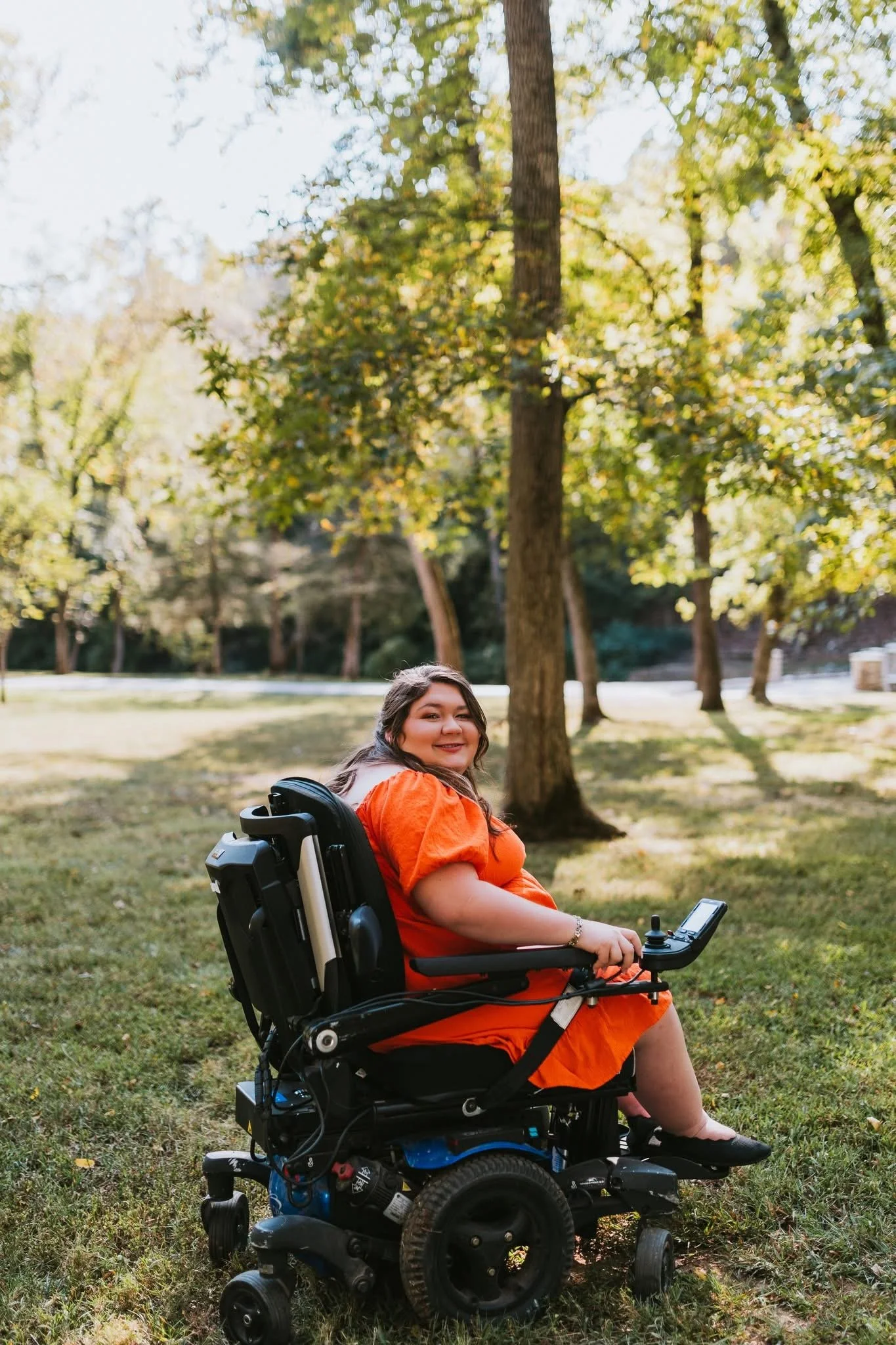
Hannah's story isn't just about disability. It's about what becomes possible when a church chooses to see the person before the diagnosis, creates space for their gifts, and invites them to fully participate in the life of the Body of Christ.
Today, Hannah serves, teaches, leads, encourages, and loves her community with contagious joy. She reminds us that every person has God-given gifts to offer, and the Church is at its strongest when everyone has the opportunity to use them.
As you read her story, consider this:
Who might be waiting for an invitation to belong?
Major Michelle Robbins
Corps Officer Perspective:
Leading with Intentionality & Inclusion
Reflections from Major Michelle Robbins
“If you are willing to look for ways to provide solutions, think outside the box, and simply try, it makes a difference. Even when it doesn't work perfectly, the effort speaks volumes.”
"Hannah is a beautiful example of Jesus in our corps. She is not only well known and loved in our community, but she serves as a Sunday School teacher, volunteers in our afterschool and summer programs, participates on the praise band, and faithfully represents The Salvation Army through community outreach. She has shown us what is possible when people are given the opportunity to use the gifts God has given them.
Being intentional and following through is necessary to reach those who may have difficulty fitting into the norms, whether physically, mentally, or emotionally. Having conversations and allowing input gives a voice to those who may otherwise feel left out.
You don't have to have all the answers. Open and intentional conversation is critical. If you are willing to look for ways to provide solutions, think outside the box, and simply try, it makes a difference. Even when it doesn't work perfectly, the effort speaks volumes."

Trauma-Informed CareCreating Spaces for Safety, Hope and Healing
-
Every woman brings a unique story into our ministries. Some experiences are visible, while others remain hidden. Trauma, abuse, grief, addiction, exploitation, domestic violence, human trafficking, and other painful life experiences often go undisclosed. As ministry leaders, we may never know the full story, but our words and actions can help create spaces where women experience safety, belonging, and healing.
A trauma-informed approach recognizes that past experiences may shape a person's behavior and responses. Instead of asking, "What's wrong with this person?" it encourages us to ask, "What may have happened to this person?" This perspective reflects the heart of Jesus, who consistently responded to people with compassion, dignity, and grace.
-
Bearing one another’s burdens:
Galatians 6:2 says, "Carry each other's burdens, and in this way you will fulfill the law of Christ."
Many burdens are invisible. Trauma-informed ministry acknowledges that people may be carrying unseen wounds and encourages leaders to respond with grace and support.
Journeying alongside each other:
Colossians 3:12 says, "Therefore, as God's chosen people, holy and dearly loved, clothe yourselves with compassion, kindness, humility, gentleness and patience."
These qualities form the foundation of both Christ-centered ministry and trauma-informed practice.
Empathizing with eachother:
Hebrews 4:15 says, "For we do not have a high priest who is unable to empathize with our weaknesses..."
Jesus demonstrated empathy toward those who were suffering, marginalized, and carrying heavy burdens. Trauma-informed ministry seeks to reflect that same posture of understanding and compassion.
-
Research shows that trauma is far more common than many people realize. Many of the women who participate in our ministries are carrying wounds we cannot see. Experiences such as abuse, domestic violence, exploitation, grief, childhood trauma, addiction, or significant loss are more common than we often realize.
Research reminds us that:
More than 1 in 3 women experience sexual violence involving physical contact during their lifetime.
Nearly 1 in 4 women experience severe intimate partner violence.
Trauma can have lasting effects on emotional, physical, relational, and spiritual well-being.
We may never know someone's story, but we can choose to create environments where every woman is treated with dignity, compassion, and grace. A trauma-informed approach helps ensure our ministries communicate safety, belonging, and the love of Christ to everyone who walks through our doors.
-
A trauma-informed approach begins with recognizing that we may never know the full story someone carries. Rather than making assumptions about a person's behavior or experiences, choose compassion over judgment.
As ministry leaders, we can:
Create safe and welcoming environments where every woman feels respected and valued.
Lead with empathy, listening without pressure or the need to "fix" someone's situation.
Honor personal choice and boundaries, allowing women to participate at their own comfort level.
Know our role, offering spiritual care while connecting individuals with trusted professional resources when additional support is needed.
-
Sources:
1 National Intimate Partner and Sexual Violence Survey (NISVS), CDC
2 U.S. Department of State, Trafficking in Persons Report
3 Substance Abuse and Mental Health Services Administration (SAMHSA), Trauma and Violence Resources